

I’ve recently returned from a lovely few days away in Amsterdam - a much-needed reset. A change of scenery, no 6 a.m. alarm clock and, most importantly, the time and space to just be.
One place I visited was met with a little resistance from me, if I’m honest. When it was suggested, my lack of knowledge about Post-Impressionist painters made me think it would be a wasted couple of hours surrounded by arty types.
How wrong I was.
So, Vincent, please accept my apologies.
Van Gogh Museum
What a place.
WOW.
I became so engrossed in Vincent van Gogh’s journey and story that I almost completely missed what is probably his most famous painting. Yes... Sunflowers was sitting right in the middle of the room, and I nearly walked straight past it.
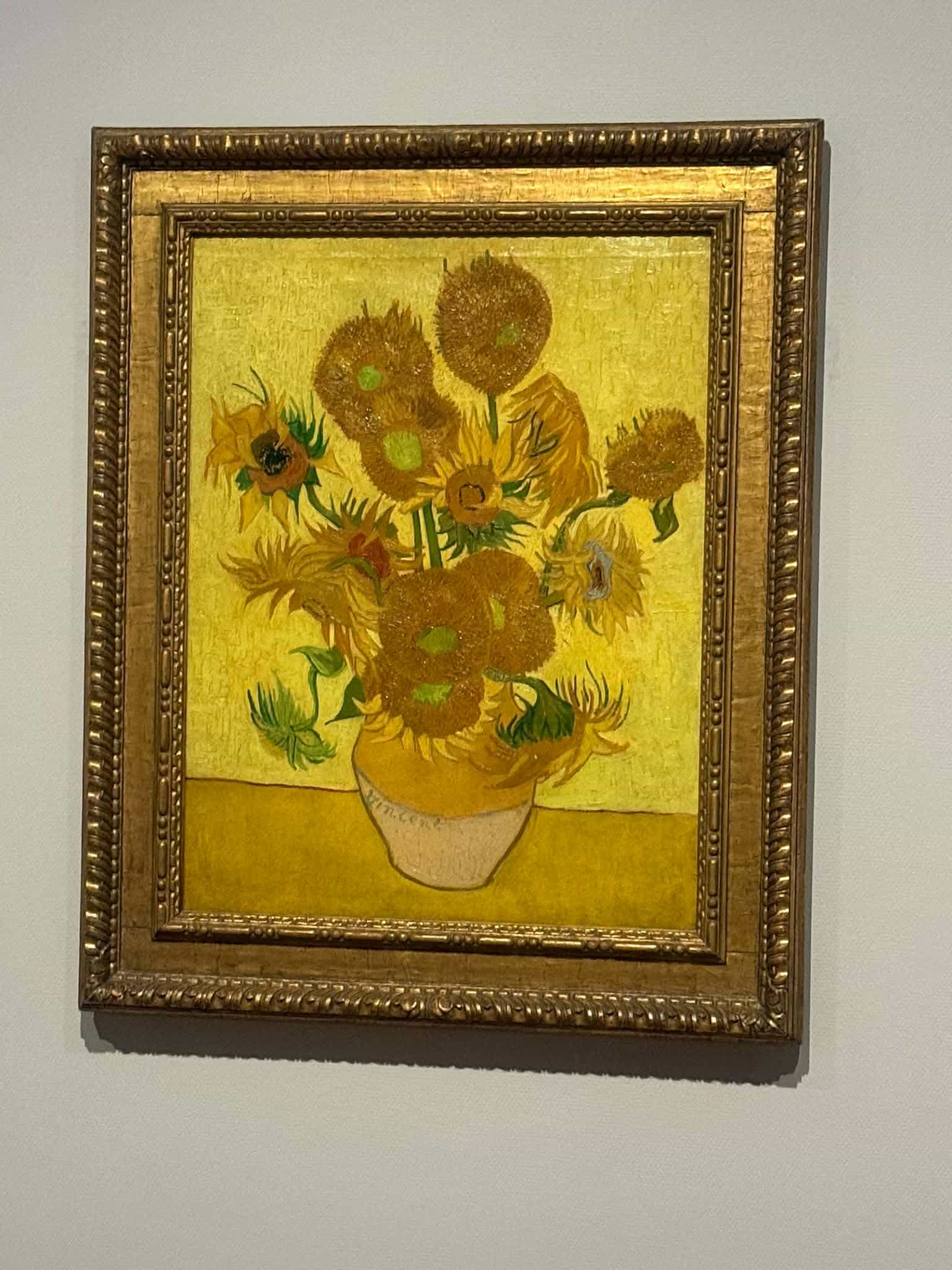
What captivated me wasn’t just his artwork, but the person behind it.
His dedication. His discipline. His patience. His relentless determination to improve.
Those qualities are no different from those of today’s highest-performing athletes. The willingness to keep going when everything feels stacked against you. The courage to try something, fail, learn from it and try again.
Vincent constantly sought feedback from his brother Theo and fellow artists in Paris. They challenged him, encouraged him and supported him - emotionally, creatively and financially.
Success, even genius, rarely happens alone.
The Biggest Misconception
Vincent suffered numerous breakdowns, hallucinations and psychotic episodes. Although he was never formally diagnosed with a specific condition, he wrote openly in letters to Theo about his “mental or nervous fever” and what he described as “madness.”
What struck me most was his self-awareness.
Recognising he was struggling, he voluntarily admitted himself to a psychiatric hospital to receive help and support. Despite his despair, he never lost faith in the healing power of painting.
Art became his therapy.
It’s something I can relate to. During one of my own hospital admissions I was encouraged to try art therapy. I was absolutely rubbish at drawing, but that wasn’t the point. The process itself mattered.
Sadly, on 27 July 1890, Vincent attempted to take his own life. He died two days later with Theo by his side.
After his death, he became known as the archetypal “mad genius” - the artist whose brilliance was supposedly inseparable from his illness.
That’s the part that frustrates me.
When someone experiences mental ill health, we so often reduce them to a diagnosis or a label. Their illness becomes their identity.
Vincent’s mental health struggles were part of who he was.
They were never all of who he was.
Nothing Has Changed
In 1882, while studying and painting the lives of labourers, Van Gogh created a drawing called Worn Out.
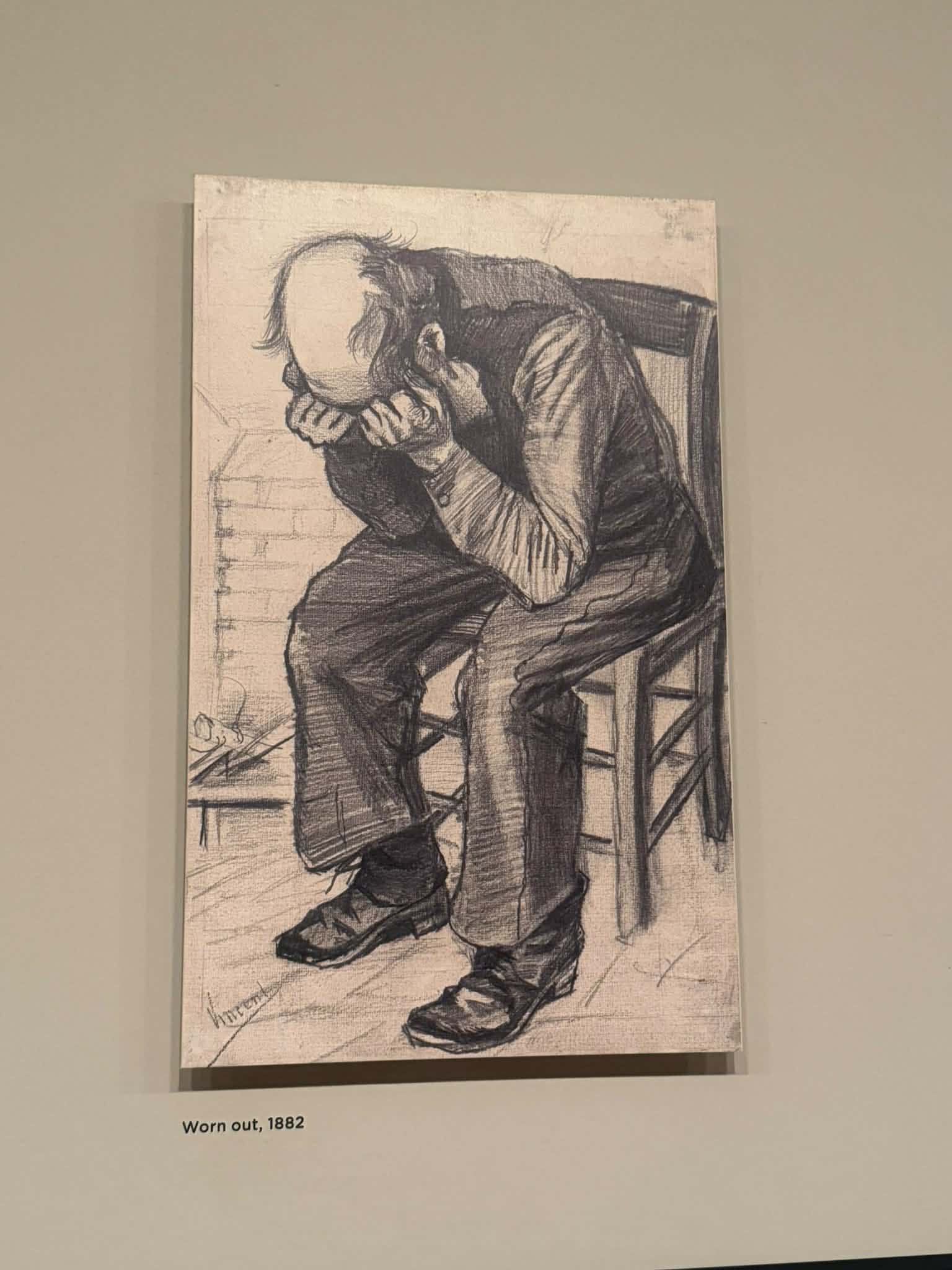
It shows a man sitting on a chair with his head buried in his hands.
The man is known to have lived in a Dutch Reformed almshouse in The Hague.
Every time I look at that image, I find myself wondering...
- Who was he?
- What was he thinking?
- Was he once a proud man who had simply fallen on hard times?
- Did he feel like there was no way back?
- Was he exhausted from working long hours for little reward?
- Was he carrying burdens he felt unable to share because he’d grown up believing he simply had to “man up”?
- Was he contemplating ending his own life?
We’ll never know.
But one thing hit me harder than anything else in that museum.
Nothing has really changed since 1882.
Why This Blog Is Called “It’s Time to Stop Talking”
Now we come to the title.
Before anyone panics, hear me out.
I’m not saying we should stop encouraging people to talk.
Talking saves lives.
Talking is often the first and most important step.
But talking alone isn’t always enough.
Across the UK we have men’s groups, talking therapies, walk-and-talk sessions, coffee mornings and support circles. They’re all incredibly valuable.
But what happens when the meeting ends?
What happens when someone walks back through their front door?
The conversation may have helped them feel lighter for a while, but if the problem that brought them there hasn’t changed, they’ll still be facing it when they’re alone with their thoughts again.
This isn’t a criticism of talking.
It’s a challenge to all of us to ask:
What happens next?
How do we help people move from feeling heard to actually changing the circumstances that are keeping them stuck?
For me, that’s where action matters.
Talking opens the door. Action helps people walk through it.
If we genuinely want to reduce suicide rates, then perhaps we need to put just as much energy into helping people solve the practical, emotional and financial problems driving them towards crisis as we do encouraging them to speak.
I know that’s a bold statement.
Maybe you’ll disagree.
Maybe it’ll make you think.
I hope it does.
#MattsMessage
Walking around that museum reignited something in me.
It’s reminded me exactly why #MattsMessage has to succeed.
The aim is simple.
To ensure that someone in crisis can access help quickly - even if they can’t afford private support.
If you haven’t heard about #MattsMessage before, please have a look around the website.
It’s built around a simple “Pay It Forward” idea.
People can either purchase a session for someone else or contribute whatever they can towards one. Those funds are then used to provide support for people who meet the eligibility criteria and need help now - not after weeks or months on a waiting list.
No GP referral.
No lengthy assessment process.
If someone needs support, they can access it quickly.
Sometimes, timing makes all the difference.
So my message is simple.
Let’s keep talking.
But let’s make sure talking leads to action.
You can help by contributing towards a session, sharing the #MattsMessage page, sharing this blog or simply helping spread the message.
This isn’t just for individuals either.
Businesses can become Hope Partners, and I’m incredibly excited about what that could achieve.
There’s also some big news coming over the next few days, including a very exciting event partnership and, hopefully, a celebrity endorsement.
Watch this space.
Thank you for taking the time to read this.
Every bit of support, no matter how small, helps us move one step closer to ensuring another family doesn’t have to experience the pain that mine has.
Thank you.
Diesel